Entry · Ref HPTCM8RA
How an Emergency Dentist in Plano, TX Treats a Dislodged Tooth
- Posted
- 2026-10-26
- Last amended
- 2026-10-26
- Account
- @trevorhppv917
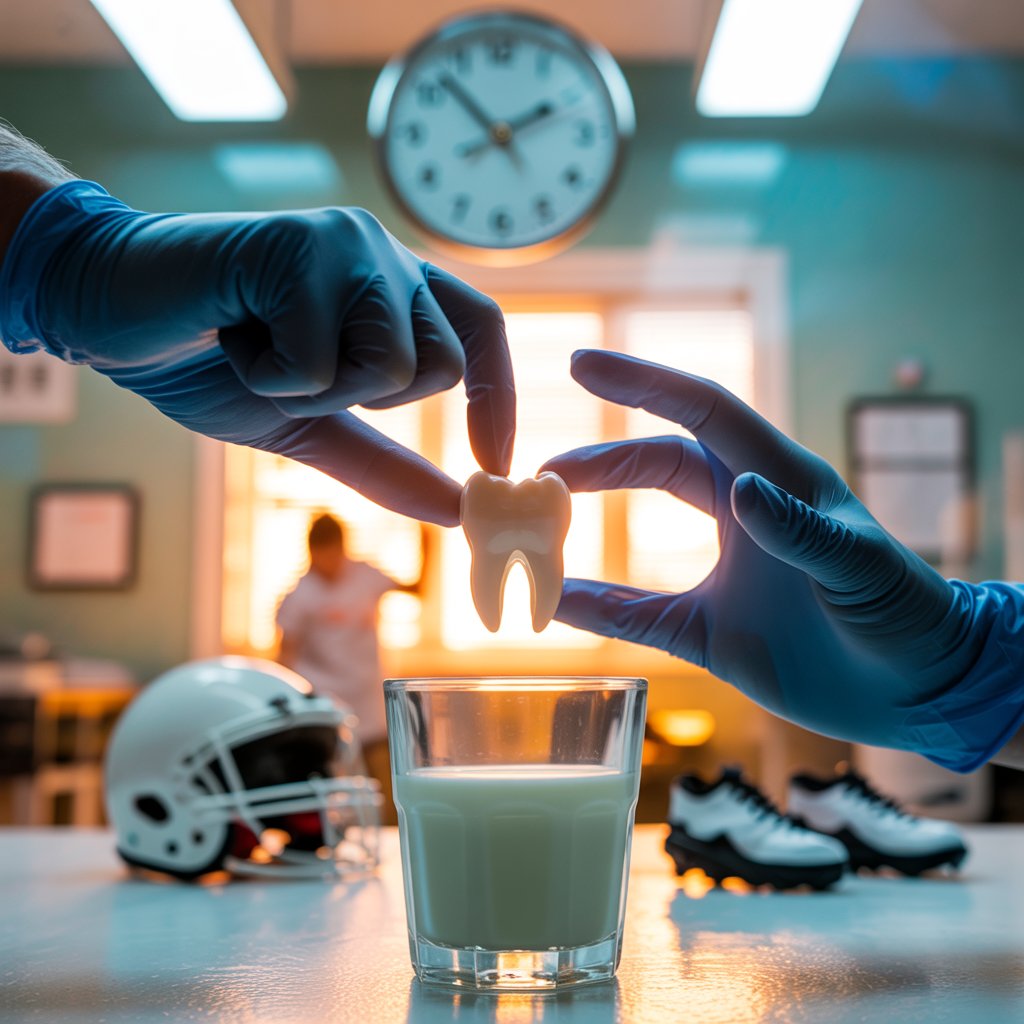
A dislodged tooth rarely happens at a convenient time. It shows up during a Saturday soccer game, after a slip on wet tile, or in the middle of dinner when someone bites down after a blow to the face and realizes something is badly off. The pain can be sharp or surprisingly dull. Sometimes there is obvious bleeding. Other times the tooth simply looks longer, pushed backward, or twisted out of position.
What matters most in those first minutes is knowing that a dislodged tooth is not the same as a chipped tooth, and it is not something to watch for a few days. When a tooth has been partially moved out of its normal position, the supporting ligament, surrounding bone, and sometimes the nerve inside the tooth have been injured. That is why prompt care from an emergency dentist in Plano, TX can make the difference between saving the tooth with relatively conservative treatment and facing more complex repair later.
In practice, people use the phrase "dislodged tooth" to describe a few different injuries. The tooth may be loose but still in place. It may be pushed deeper into the socket. It may be shifted forward, backward, or sideways. It may also feel high when you bite, as though it no longer fits with the teeth around it. Each version changes how the dentist responds.
What “dislodged” means in a dental emergency
Dentists use more specific terms than most patients do, because the exact direction and severity of the movement affects treatment. A tooth that is merely loosened after trauma is different from one that has been pushed out of alignment. A tooth that is driven upward into the gum and bone is a more serious injury than one that is only slightly mobile.
The most common scenarios include a tooth that is extruded, meaning it has been partially pulled out of the socket, a tooth that is laterally luxated, meaning it has shifted sideways, and an intruded tooth, meaning it has been pushed deeper into the bone. Patients often describe these injuries with practical language instead. They say the tooth feels longer, crooked, jammed, or like it might fall out.
That language is useful, because it points to urgency. If the tooth is out of position, the dentist is not just treating pain. The goal is to protect the periodontal ligament, the thin band of tissue that anchors the tooth root to the surrounding bone. That tissue is remarkably important and surprisingly fragile. When it is compressed, torn, or contaminated, the risk of complications rises.
The first few hours matter more than most people realize
A dislodged tooth can deteriorate quickly, not always because the tooth itself is broken, but because the tissues around it begin to respond to trauma. Swelling sets in. Blood clots form. The tooth can become more difficult to reposition cleanly if too much time passes. The bite may also force the injured tooth into a worse position every time the patient closes down.
I have seen cases where someone waited until Monday because the bleeding had stopped and the discomfort seemed manageable. By then, the tooth had begun to stabilize in the wrong position, and the patient had been unconsciously avoiding one side of the mouth all weekend. Correcting the problem was still possible, but it was more involved and less predictable than it would have been on the day of injury.
That does not mean every dislodged tooth will be lost if treatment is delayed by a few hours. Dentistry is rarely that absolute. It does mean the best outcomes usually come when the injury is examined promptly, x-rays are taken early, and the tooth is guided back into a more favorable position before the body starts healing around the displacement.
What to do before you get to the office
The right first aid can reduce additional damage. The wrong move can make a manageable injury worse.
- Call an emergency dental office immediately and explain that the tooth has been moved out of position, not simply chipped.
- Do not forcefully wiggle, twist, or repeatedly push on the tooth to “test” it.
- If there is bleeding, apply gentle pressure with clean gauze or a damp cloth.
- Use a cold compress on the outside of the face in short intervals to limit swelling.
- Eat nothing hard or crunchy, and avoid biting on the injured area.
If the tooth is a baby tooth, parents should be especially careful not to manipulate it aggressively. Primary teeth sit close to developing adult teeth, and rough handling can create a second problem where only one existed before. If the injured tooth belongs to an adult and it appears dramatically displaced, the caller should mention whether the tooth is still attached, whether the bite feels “high,” and whether any portion of the tooth appears fractured.
What the emergency dentist looks for first
When a patient arrives with a dislodged tooth, the first phase of care is a focused trauma exam. Dentists do not start by guessing. They inspect soft tissue injuries, lip lacerations, gum tears, and facial swelling. They ask how the injury happened because the mechanism often predicts hidden damage. Emergency dentist Plano, TX A tooth injured by a direct elbow during basketball may behave differently than a tooth affected by a face-first fall on concrete.
The exam usually includes checking whether the tooth moves, whether it is tender to light tapping, whether the bite is altered, and whether neighboring teeth were injured too. Trauma seldom affects one structure in isolation. If one front tooth is displaced, adjacent teeth may have hairline cracks, ligament injury, or pulp damage that is not obvious at first glance.
X-rays are a central part of the visit. They help show whether the root is fractured, whether the socket wall is intact, and how far the tooth has moved. In some trauma cases, especially those involving deeper intrusion or concern about surrounding bone, additional imaging may be appropriate. The dentist is trying to answer several practical questions at once:
- Is the tooth still salvageable in its current state?
- Can it be repositioned immediately and safely?
- Has the root, socket, or surrounding bone been damaged?
- Will the tooth likely need splinting, nerve monitoring, or later root canal treatment?
- Are there injuries to nearby teeth that could be missed without imaging?
That assessment guides the rest of the appointment. With trauma, speed matters, but precision matters just as much.
Repositioning the tooth
For many dislodged permanent teeth, the immediate goal is to return the tooth to its proper position as gently and accurately as possible. This is not a crude push. It is a controlled maneuver based on exam findings and imaging.
If the tooth has shifted outward or sideways, the dentist may numb the area first, then carefully guide the tooth back into alignment. Patients often imagine this will be dramatic. In reality, when done correctly, it is usually deliberate and measured. The dentist is feeling resistance, checking the bite, and trying to seat the tooth in a way that protects both the root and the surrounding tissues.
When the tooth has been pushed inward, into the socket, the decision can be more complicated. Mild intrusion may sometimes be monitored, especially in younger patients whose teeth and surrounding bone may permit some spontaneous correction. More severe intrusion often requires active repositioning or referral planning, depending on the age of the patient, the stage of root development, and the degree of displacement.
The dentist also evaluates whether the tooth can be brought back into functional alignment without causing new trauma. If the tooth is returned to place but still hits too early when the patient bites, that contact can keep the area inflamed. Small bite adjustments may be part of the same emergency visit.
Why splinting is often part of treatment
After repositioning, a tooth that has been dislodged often needs support while the ligament heals. That is where a splint comes in. In dental trauma, a splint is usually a small, flexible stabilization system attached to the injured tooth and neighboring teeth for a limited period. It is not meant to freeze the tooth rigidly forever. It is meant to keep it stable enough to heal while allowing the right amount of physiologic movement.
The exact type of splint depends on the injury. A simple luxation injury may need a shorter stabilization window than a case involving a root fracture. The dentist chooses a method that secures the tooth without making hygiene impossible. Patients are often relieved to learn that this is usually much smaller and less dramatic than they expected.
There is judgment involved here. Too little stabilization can leave the tooth vulnerable. Too much rigidity for too long can also be unhelpful because the ligament heals best when it is protected, not mummified. This is one of those areas where experience matters. Trauma cases do not reward a one-size-fits-all approach.
Managing pain, bleeding, and soft tissue injuries
Pain from a dislodged tooth can come from several sources at once. The tooth ligament is inflamed, the gum may be torn, the lips or cheeks may be bruised, and the patient may be clenching from stress without realizing it. Emergency care usually addresses all of those layers, not just the position of the tooth.
If there are cuts inside the mouth, the dentist checks for embedded debris and whether any tissue requires suturing. That is especially important after falls onto pavement, where tiny grit particles can be trapped in the lip or gum tissue. If fragments of enamel are missing, the dentist may inspect the lips and cheeks carefully because sometimes the broken piece is not lost, it is embedded.
Instructions for home care tend to be specific. A soft diet is usually advised for a period of time. Patients are told to avoid biting directly into firm foods with the injured tooth. Good oral hygiene remains important, but it has to be done gently. A toothbrush that is too aggressive around the area can irritate healing tissue. Some patients benefit from rinsing protocols, depending on the case and the dentist’s judgment.
Not every tooth responds the same way afterward
One of the harder parts of trauma care is explaining that a tooth can look better after emergency treatment and still need close observation. Repositioning is the first chapter, not always the last one.
The pulp, which contains the tooth’s blood supply and nerve tissue, may recover after trauma, or it may not. A tooth that has been significantly displaced can later show signs that the pulp has become inflamed or nonvital. That may lead to root canal treatment, not because the emergency care failed, but because the original injury was severe enough to damage the inner tissue beyond repair.
This is especially common in fully developed permanent teeth after certain luxation injuries. Younger teeth with open root tips sometimes have a better chance of reestablishing blood flow. Older teeth may be less forgiving. Dentists often schedule follow-up visits to test vitality, review x-rays, and watch for color changes, sensitivity changes, or signs of root resorption.
Patients are sometimes surprised by how long monitoring lasts. Trauma follow-up can stretch over months because some complications develop gradually. A tooth that seems quiet at two weeks may change at eight weeks. That is normal for this kind of injury. It is one reason emergency dentistry is not only about same-day intervention. It is also about staged reassessment.
Adult teeth and baby teeth are treated differently
Parents often assume that a loose or displaced baby tooth should simply be removed, but that is not automatically true. The decision depends on how far the tooth moved, the child’s age, the risk to the permanent successor, and whether the child can tolerate conservative management.
With primary teeth, the dentist is thinking beyond the visible injury. A baby tooth sits in close relationship to the developing permanent tooth underneath. If the injured primary tooth has been pushed in an unfavorable direction, leaving it alone may threaten the adult tooth bud. On the other hand, aggressive attempts to reposition a primary tooth can also create risk. That is why treatment of pediatric trauma requires restraint and careful judgment.
For permanent teeth, the aim is generally to preserve and stabilize the natural tooth whenever possible. Adults and teenagers often have stronger expectations about appearance, and understandably so, especially when front teeth are involved. But cosmetics cannot drive every decision. A slightly rough edge can be polished later. A tooth displaced in the socket needs biologic priorities handled first.
What follow-up usually involves
After the emergency visit, patients usually leave with a clear idea of what the next few weeks should look like. Soft foods, cautious brushing, and avoiding direct pressure on the tooth are standard themes. The dentist may ask the patient to return for splint review, bite checks, additional imaging, or pulp testing.
The sequence depends on the injury, but the follow-up process often includes monitoring for several issues at once: whether the tooth remains stable, whether the bite stays comfortable, whether the pulp is recovering, and whether the surrounding bone and ligament appear to be healing without infection or resorption. A tooth that becomes increasingly dark, persistently painful, or sensitive to biting after the initial phase may need further treatment.
This is where good communication matters. A patient who knows what changes to watch for is far more likely to return promptly if something shifts. In my experience, trauma cases go more smoothly when patients understand that "feels better" and "finished healing" are not the same thing.
A few edge cases that change the plan
Not every dislodged tooth follows the textbook. Sometimes Emergency dentist Plano, TX the tooth is displaced and cracked at the same time. Sometimes the patient has braces, which can complicate both the bite and the stabilization method. Sometimes the injury happened during a car accident or a more significant fall, and the dental problem is only one part of a larger medical picture.
There are also patients with habits or conditions that make healing less predictable. A person who grinds heavily at night may place extra force on a splinted tooth. Someone with poor baseline gum support may have less favorable periodontal healing than a patient with a healthy attachment apparatus. Tobacco use can complicate soft tissue recovery. Even anxiety plays a role. A highly anxious patient may repeatedly check the tooth with the tongue or fingers, which can irritate the area and increase mobility.
Another common edge case is delayed presentation with a tooth that has already begun settling in the wrong position. In those situations, the emergency dentist may still be able to reposition and stabilize the tooth, but there is a point where referral to a specialist becomes the wiser path. The best care is not always the most heroic intervention done immediately. Sometimes it is recognizing when an oral surgeon or endodontist should be brought in early.
When the injury is more than a dislodged tooth
A tooth injury can distract from more serious trauma. If the patient has trouble opening the mouth, numbness in the lip or chin, persistent dizziness, facial asymmetry, or signs of jaw fracture, that changes priorities. Dental care remains important, but broader medical evaluation may need to happen first or alongside it.
The same applies when a child loses consciousness, vomits, or shows signs of head injury after the event. An emergency dentist can guide the dental side of the situation, but oral trauma does not happen in a vacuum. The best clinicians keep the whole patient in view.
Why local access matters in a true dental emergency
When someone needs an emergency dentist in Plano, TX for a dislodged tooth, proximity is not just a convenience. It affects timing, swelling, stress level, and the chance of preserving normal anatomy. Families under pressure do better when they are not spending hours trying to decide whether the injury can wait.
A local emergency dental visit also tends to improve continuity. Trauma cases often need rechecks, x-rays over time, and occasional coordination with specialists. Being treated close to home makes those appointments more likely to happen, and follow-up is where many good saves are protected.
A dislodged tooth can look frightening, especially when it involves a front tooth and visible blood. But with prompt evaluation, careful repositioning when appropriate, stabilization, and close monitoring, many of these teeth can be preserved. The key is treating the injury for what it is, not as a minor nuisance that will settle down on its own. Teeth can sometimes forgive a lot, but they do best when the response is fast, deliberate, and clinically informed.
Vitality Dental
1220 Coit Rd # 106, Plano, TX 75075, United States
+1 972-645-4100
FAQ About Emergency dentist Plano, TX
Will the ER do anything for dental pain?
An emergency department can assess urgent symptoms and provide medical stabilization. Definitive treatment of the tooth usually requires a dentist. Seek emergency medical care for breathing or swallowing difficulty, uncontrolled bleeding, or serious facial injury.
What to do if I have a dental emergency in the middle of the night?
Contact a dentist or after-hours dental service promptly for guidance. If a permanent tooth is knocked out, keep it moist in milk while seeking immediate care. If symptoms suggest a medical emergency, go to an emergency department.
What qualifies as a dental emergency?
A knocked-out permanent tooth, severe or persistent tooth pain, a significant dental injury, or swelling may require urgent dental assessment. Call a dentist to describe the symptoms and determine timing. Uncontrolled bleeding or difficulty breathing or swallowing requires emergency medical care.